Defining Our Way
Fleming College’s Department of Emergency Management & Campus Security operates through a comprehensive framework built around five core pillars: Campus Security & Incident Reporting, Emergency Management, Technology & Intelligence, Policy & Governance, and Beyond the Uniform & Training. Together, these pillars create a resilient safety infrastructure that enhances the overall success and sustainability of the institution. By integrating these five pillars, Fleming College creates a comprehensive safety and emergency management system that not only protects its community but also promotes a positive learning environment. A secure campus attracts students, staff, and partners, facilitating academic excellence and operational efficiency. Furthermore, a proactive and well-coordinated approach to security and emergency management minimizes disruptions, reduces risks, and demonstrates the college’s commitment to the well-being of its community—all of which are essential to the institution’s long-term success and reputation.
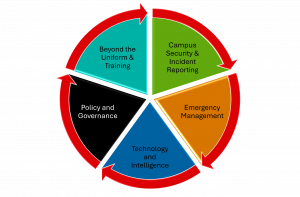
Campus Security & Incident Reporting
This pillar ensures a safe learning and working environment by maintaining a visible security presence and encouraging prompt reporting of incidents. Efficient incident reporting systems facilitate quick responses to issues such as theft, vandalism, or safety hazards, helping to prevent escalation and maintain campus integrity. A secure campus fosters student and staff confidence, which is vital for academic and operational success.
Emergency Management
Preparedness and response are central to this pillar. Fleming College’s emergency management initiatives include developing comprehensive plans for various scenarios—natural disasters, health emergencies, or security threats. Regular drills, training, and clear communication channels ensure that the institution can effectively respond to emergencies, minimizing impact and ensuring safety. This resilience supports continuous operations and preserves the college’s reputation.
Technology & Intelligence
Leveraging advanced security technology—such as surveillance systems, access controls, and threat detection tools—enhances situational awareness. Intelligence gathering from various sources helps anticipate and mitigate potential risks before they materialize. This proactive approach reduces vulnerabilities and ensures swift, informed decision-making during crises, thereby safeguarding the campus community.
Policy & Governance
Strong policies and governance frameworks establish clear standards, responsibilities, and procedures for security and emergency response. They guide staff and students in understanding their roles, ensuring compliance, and fostering a culture of safety. Effective governance also supports continuous improvement through audits and policy updates, aligning security practices with evolving threats and best practices.
Beyond the Uniform & Training
This pillar emphasizes the importance of specialized training, ongoing education, and community engagement. Equipping security personnel with current skills and knowledge ensures high standards of professionalism. Additionally, fostering a culture of safety through awareness campaigns and collaboration with students and staff enhances overall security and resilience.